
SECMD26: Sankey stands firm on the foundation of what he expects in future negotiations
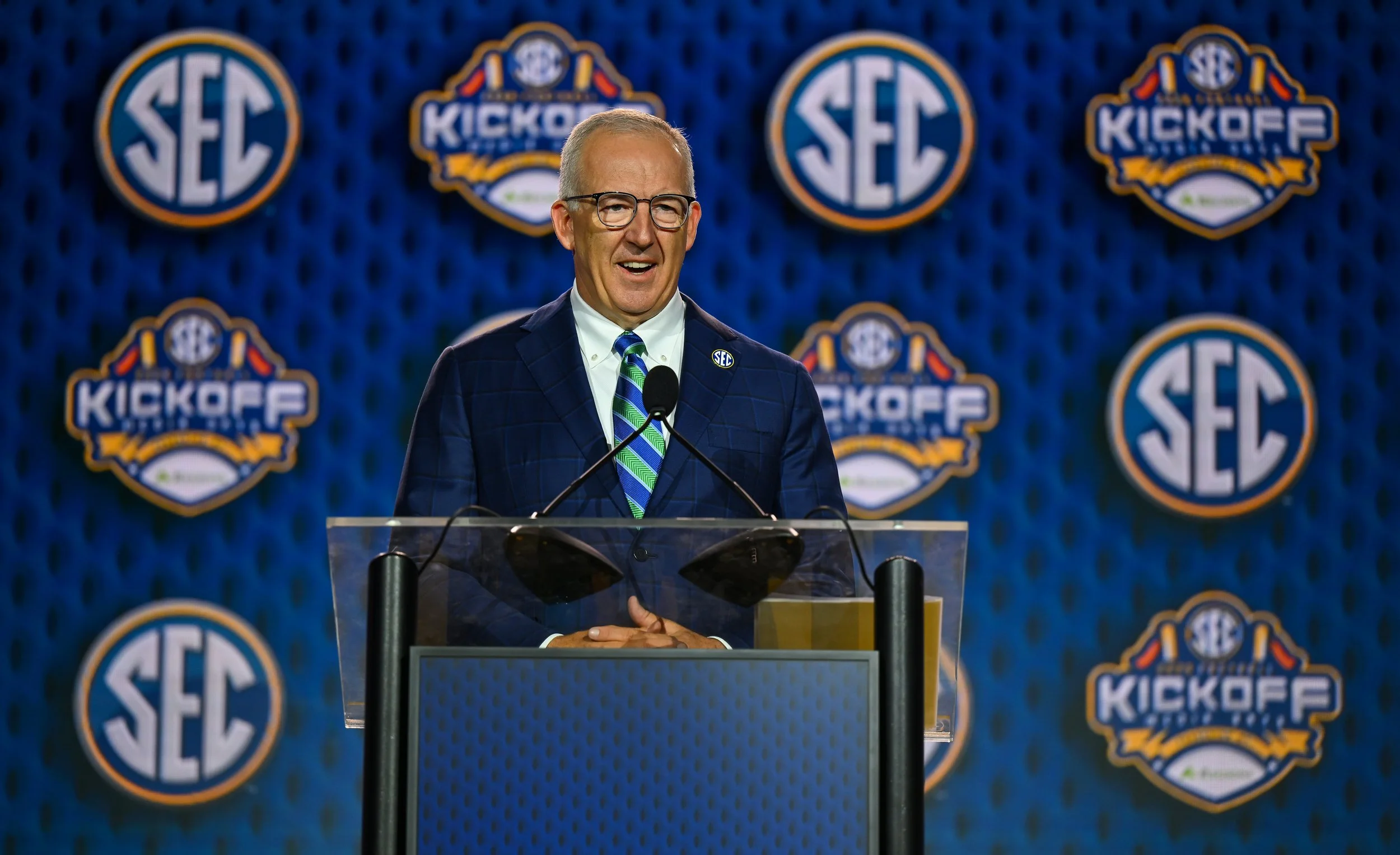
SEC commissioner Greg Sankey was asked about a bevy of subjects, all an important part of where the league is and where it will move to keep things where they are. (Courtesy Southeastern Conference)
By GRAHAM DUNN
TAMPA - The more things change, it seems as though the Southeastern Conference wants to stay the same.
It makes sense considering where the league is and if commissioner Greg Sankey has his way, they will attempt to keep all things status quo, if at least for a while.
So were the comments of Sankey to open the SEC Kickoff Media Days in Tampa on Monday.
In typical fashion, Sankey opened with a state of the conference providing memos of what has happened in the last several months to what he would like to see from not only college football but other sports.
“Southeastern Conference football remains the second most-watched sports property in the United States,” Sankey claimed, “trailing only the National Football League. We account for just over 40 percent of the live viewership hours consumed among the four major conferences.
Our football programs draw an average of 80,000 fans per game. That's our average number. This was the stat of my summer. That is the highest average attendance for any sport league in the world. We're national leaders in attendance in just about every other sport sponsored by the Southeastern Conference.
Across every measure, interest in our league continues to grow.”
Despite these numbers, the rest of college football is doing all it can to bring the game to a different level, one that the SEC already claims.
No matter, Sankey would like to have everything stay within the realm of the current system that makes, seemingly, more sense.
“There is a line embedded in the current version of the Protect College Sports Act that the football season be fully completed by Jan. 8,” he said. “If you think through the implications of particularly that date, remember the American Football Coaches Association introduced that idea, produced a frustrated phone call from me to Craig Bohl about the lack of consultation. But you have to find places to play the games. You have to think about whether overlap of those games when they're played is acceptable or not.”
There have been hints that if the SEC doesn’t get its way in the current fight over number of playoff teams or revenue sharing from television, it might fly off and start its own “league.” Sankey wasn’t ready to commit to that idea but says, yes, there is a current discussion and
“I do not believe that is a leverage point,” he exclaimed when asked if the thought might be used as a bargaining chip with Congress in the battle for the Protect College Sports Act
“What I think is important is those comments represent a high level of frustration with the circumstance in which we find ourselves. We have regulated ourselves more progressively than other colleagues by choice, across our league.
“We went through a College Football Playoff discussion for years and introduced a 12-team Playoff where it just sat because colleagues couldn't move. They had reasons, but those reasons really didn't resonate.
So understand that beneath the observation is frustration. But I also know the pride with which I spoke of 13 national championships, and there is meaning and value and I do think a national expectation that we participate in a national organization.
“But that national organization must function in a healthy manner; otherwise, that simmering will continue.”
Questions were posed regarding the SEC adding a ninth game to the conference schedule this season. The idea, as it was preposed, was to strengthen teams’ resume when it came to a berth in the College Football Playoff.
Instead - at least this season when the playoff is still limited to 12 teams - it might backfire.
“I'm actually one who believes competitors want great challenges,” Sankey said. “I'm unapologetic about that reality. As it relates to the College Football Playoff Selection Committee, we have heard about strength of schedule, strength of record. I think there were some references for strength of conference.
“We had what I'll call an unsatisfactory conversation with members of the College Football Playoff staff and some of their advisers in Destin. That's rehashing from a couple months ago, that's not a secret. That's a reminder of that process needing to continually improve. My confidence is that people will act with integrity. I do think we have questions about the understanding of the strength and rigor associated with competing in the Southeastern Conference.”
In his mind, the College Sports Act is about one of two issues. “Title II” as Sankey called it, attempts to redefine the limitations of super leagues and media rights.
“In Title II, when I first read it, it's like, Why is that even in there? I've commented on this in real-time in Destin. There are interests that have introduced those issues,” Sankey said. “We have three or four changes there, if Title II remains, that are critically important to us. Not everything is necessarily the same, but I think every element that we've introduced is worthy of conversation. I appreciate the engagement of the Senators in taking it so seriously.”
All of the issues seem to point to Sankey as a “custodian” of college athletics. In fact, one reporter used the term when describing Sankey’s role in all of this.
“The SEC keeps me up at night. It's why I have less hair and grayer hair than I had when I stood in this podium in Birmingham in 2015,” he said.
“'ve said over and over, there are situations and circumstances and decisions where maybe that's not what the Southeastern Conference membership wanted initially, but we worked through our thinking because it was better for all of college sports.”